
Taking measurements is the first step in any kitchen remodel. Ideally we’d like to come out and measure your space for you, but if we’re unable to do so for some reason – such as the current lockdown – you can do it yourself and send the dimensions to us for a free quotation and design advice.
Measuring for a kitchen renovation isn’t as simple as might seem. It’s imperative that you record the position and size of all the features that will affect your final design. If you don’t want to move your plumbing, gas and electrical points, then you will need to pinpoint their exact locations in your kitchen layout. Door openings, windows and other fixed features also need to be recorded.
Fortunately, it’s not necessary to have any specialist equipment or computer programmes to draw up your kitchen plan. You’ll need: a sheet of paper, a pencil, an eraser and a tape measure. Once you have these items on hand, you can follow the steps below to draw your kitchen.
1. Draw a basic outline
Look at your kitchen, what shape is it: square, L-shaped, U-shaped or a simple galley? Draw an outline of your kitchen on the paper, sketching in doors, windows and doorways as you go.
2. Start measuring
Don’t measure existing cabinets, as these may not be making optimal use of your space. Rather concentrate on the available wall space. Measure the width of each wall, noting down the measurements in centimetres on your sketch. It’s easiest to move around your kitchen in a clockwise direction so that you can keep track of what you’ve already measured.
3. Note down structural features
Make a note of where your windows and doors are, and how big they are. First, measure the distance from the corner to the near edge of the opening. Then measure the window or door itself – how wide and tall it is – and, finally, measure the distance from the far edge of the opening to the other end of the wall. These are the horizontal measurements. In the case of windows, you’ll also need to measure the height above the floor and the distance from the top edge to the ceiling (vertical measurements). Ensure you place your tape measure on the floor, not on the skirting board.
Pro tip: Check the accuracy of your measurements by adding each of the above dimensions (distance from corner to window edge, window width and distance from window edge to corner) together. If you get the same number as the wall width in 2 above (or very close to it), you’re on the right track.
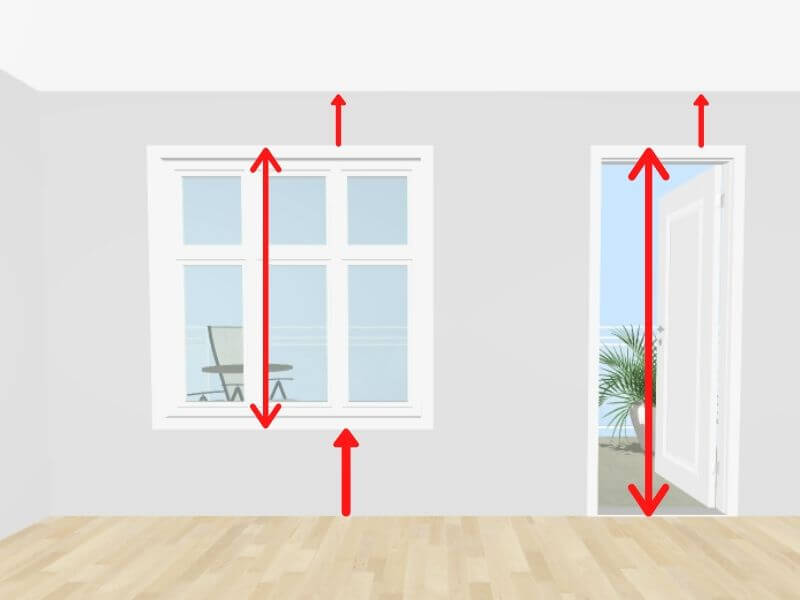
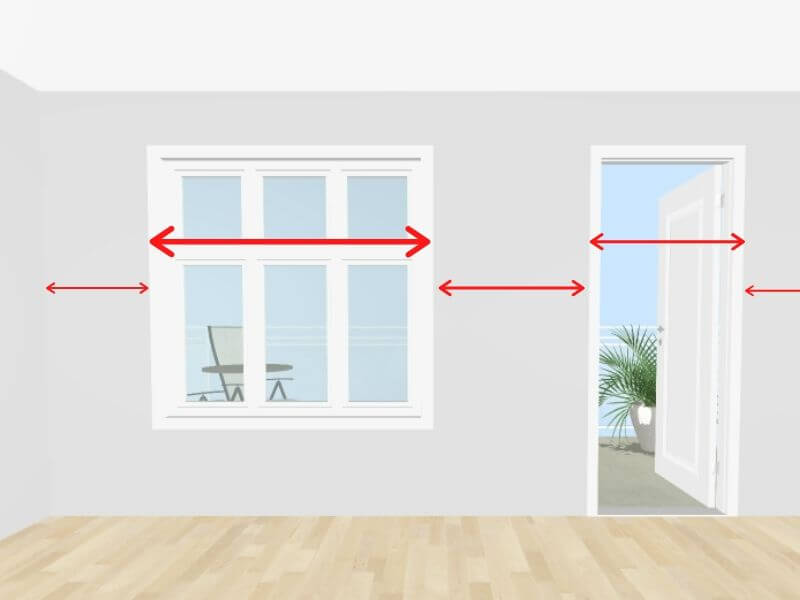
For added accuracy, you can measure any niches, recesses, ledges or other structural features that you want to keep in your final design. You can follow the same methodology as you did with your windows and doors. And be sure to remember to measure how far these features extend or recede from the wall.
4. Plot any inlets and outlets
Next, you can map any electrical, gas and plumbing points. Use a square to indicate an electrical or gas point, and a circle to indicate a plumbing point. Measure from the closest corner to the centre of the point and note the distance on your drawing. If you’re plotting the location of a tap, measure to the centre point of the tap. Again, it’s important to note the height from the floor.
5. Measure wall height
The last measurement you’ll take is the height of your ceiling from floor to ceiling boards.
Pro tip: It’s best to measure wall height at either end of each wall. Very few houses are completely level and you’ll often find a difference in ceiling height from one side of the room to the other.
6. Double check your measurements
The old adage, “measure twice, cut once” rings true here. Once you’ve been around the room once, do a quick check over all your measurements and create your final sketch.
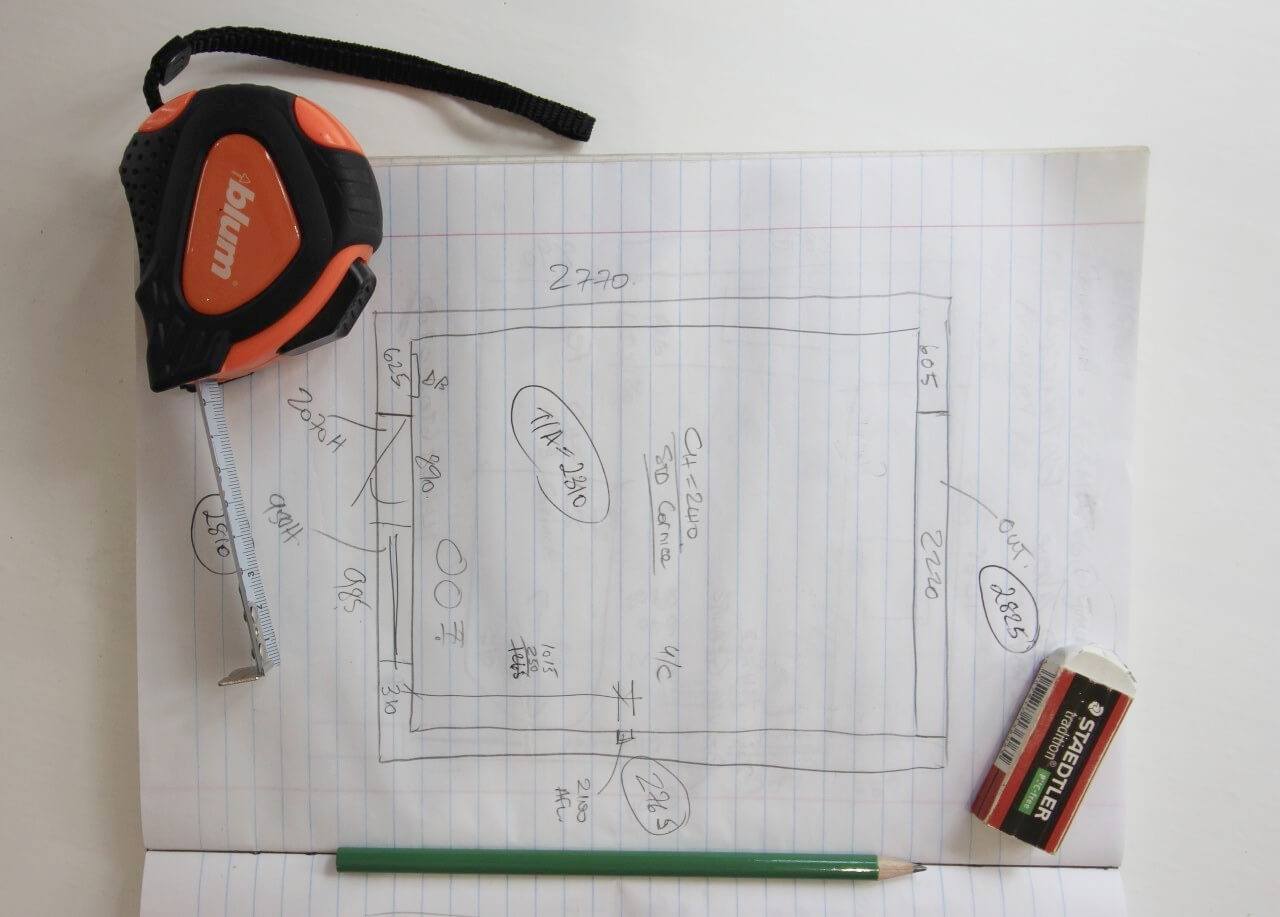
When you’re happy that your kitchen plan is accurate, you can take a picture or scan it in and send it to us. We’ll give you a call to find out a few details about what you want from your kitchen renovation before we start planning the new layout.
Once we have all the details about the finishes and fittings you’d like, we can draw up an obligation-free quotation to give you an idea of what your new kitchen might cost. If you’re looking for inspiration, you can browse our kitchen gallery or Facebook page to see some of the looks we’ve created for our happy clients.
Get measuring and send your drawing – or your architects’ plans – to info@select-a-kitchen.co.za, and we’ll help you to create the kitchen of your dreams. If you need some help with measuring, you can always give us a call on 021 554 5290.

![Kitchen designs South Africa: Prices from R50,000 to R1 million [With pictures]](https://www.select-a-kitchen.co.za/wp-content/uploads/2023/11/Blue-kitchen-with-gold-handles-400x250.jpg)
![How much does a kitchen renovation cost in South Africa? [Updated 2025]](https://www.select-a-kitchen.co.za/wp-content/uploads/2020/06/Kitchen-cost-blog-400x250.png)
